

The Chicxulub Crater is a massive impact crater located beneath the Yucatán Peninsula in Mexico. It was formed about 66 million years ago when a large asteroid, estimated to be around 10–15 kilometers (6–9 miles) wide, struck Earth.
- Diameter: Approximately 180 kilometers (112 miles).
- Age: About 66 million years old.
- Location: Near the town of Chicxulub.
- Impact Energy: Billions of times more powerful than atomic bombs.
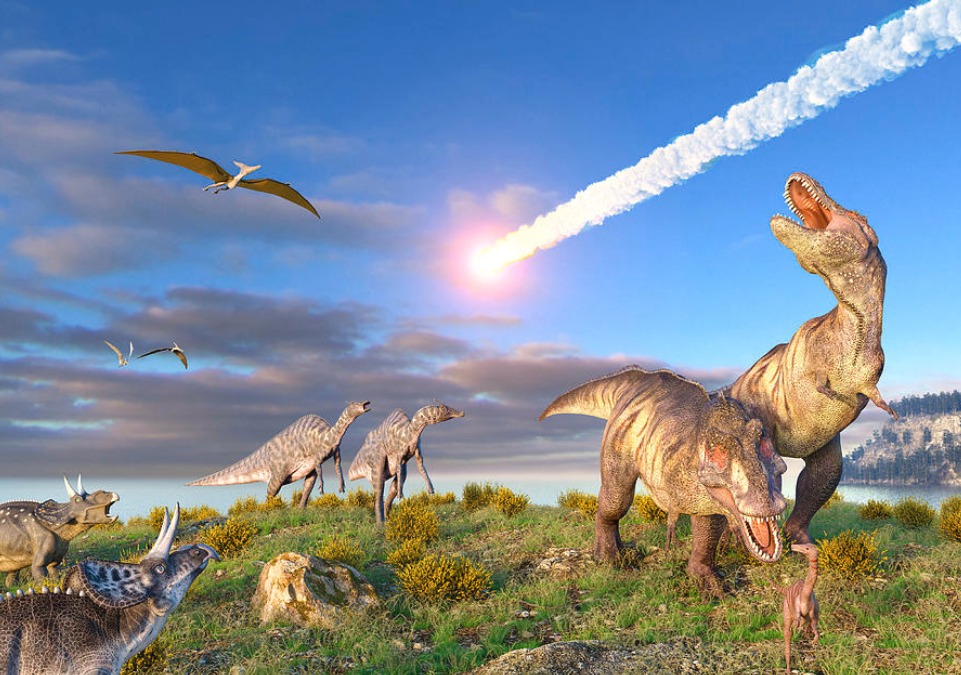
Scientists believe the Chicxulub impact triggered the Cretaceous–Paleogene (K–Pg) extinction event, which caused the extinction of about 75% of Earth’s species, including the non-avian dinosaurs.
- Massive earthquakes and tsunamis.
- Global wildfires.
- Dust and debris blocked sunlight for months or years.
- Dramatic climate changes that disrupted ecosystems worldwide.
Discovery
The crater was identified in the 1970s through geophysical surveys conducted by oil companies. Later research linked it to the mass extinction event that marked the end of the age of dinosaurs.
Today, the Chicxulub crater is considered one of the most important geological discoveries for understanding Earth’s history and the extinction of the dinosaurs.
More About the Chicxulub Crater

The Chicxulub Crater is one of the largest and most significant impact craters on Earth. It provides crucial evidence for understanding how catastrophic events can reshape life on our planet.
Formation of the Crater
About 66 million years ago, an asteroid struck Earth at a speed estimated between 20 and 30 kilometers per second (45,000–67,000 mph). The impact excavated a huge cavity in the Earth’s crust and released an amount of energy equivalent to billions of nuclear bombs.
The asteroid likely hit a shallow sea that covered part of the Yucatán region at that time. The collision vaporized rock, water, and the asteroid itself, ejecting enormous quantities of material into the atmosphere.
Size and Structure
- Diameter: ~180 km (112 miles)
- Depth (original): Several kilometers deep
- Type: Complex impact crater with a central peak ring
- Buried beneath younger sediments, making it difficult to see directly from the surface
Scientists have drilled into the crater and recovered rock samples that reveal how the Earth’s crust responded immediately after the impact.
Connection to Dinosaur Extinction
The Chicxulub impact is linked to the Cretaceous–Paleogene extinction event, which eliminated approximately 75% of all species on Earth.
Groups severely affected included:
- Non-avian dinosaurs
- Many marine reptiles
- Ammonites
- Numerous plant and plankton species
Some groups survived and later flourished:
- Birds (modern descendants of dinosaurs)
- Mammals
- Crocodilians
- Turtles
Global Consequences
1. Tsunamis
The impact generated gigantic tsunamis that spread across ancient oceans.
2. Wildfires
Hot debris re-entering the atmosphere may have ignited widespread fires across continents.
3. Darkness
Dust, soot, and sulfur particles blocked sunlight, reducing photosynthesis and causing food chains to collapse.
4. Climate Change
Global temperatures dropped sharply, creating an “impact winter” that lasted months to years.
Evidence Supporting the Impact
Scientists found several clues worldwide:
- A thin layer rich in the rare element iridium.
- Shocked quartz crystals, which form under extreme pressure.
- Tiny glass beads called tektites produced by molten rock.
- Geological dating showing the impact occurred at the same time as the mass extinction.
Scientific Drilling Projects
In 2016, an international team drilled into the crater’s peak ring and recovered cores from deep underground. These samples helped scientists understand:
- How large craters form.
- How life recovered after the impact.
- Conditions on Earth immediately following the catastrophe.
Why Chicxulub Matters
The Chicxulub impact is a reminder that asteroid impacts can dramatically alter Earth’s environment. It also guides modern efforts by organizations such as NASA to detect and track potentially hazardous near-Earth asteroids.
Without the Chicxulub impact, dinosaurs might have continued to dominate Earth, and mammals—including humans—might never have become the planet’s dominant large animals.